
Database Confidential Information Inspection System Portable All-in-one Machine
Applications
After More Than 20 Years Of Development, Blade Has Continuously And Deeply Grasped Market Demand And Accumulated A Large Number Of Customer Resources And Rich Service Experience.

Case Background
Chengdu Bitsecurity Technology Co., Ltd. Is A Provider Focusing On Big Data Security Technology And Big Data Security Solutions. The Company Is Based On The Development Trend Of Big Data And Cloud Computing, And Takes Big Data “System Security” And “Data Security” As The Company’s Technical Development Direction. It Provides Targeted And Applicable Security Solutions To Operators, Big Data Exchanges, Banks And Other Big Data Core Application Departments, And Has A Professional Big Data Security Entrepreneurial Team.
Case Analysis
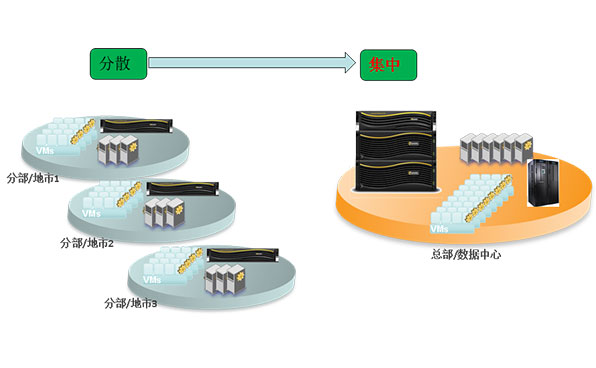
In Recent Years, The Number Of Leaks In National Party And Government Agencies And Enterprises Has Been On The Rise. One Of The Main Reasons Is That In The Context Of Big Data And Cloud Computing, More And More Data Is Concentrated In Data Center Databases For Centralized Storage, And Data Is Scattered In Different Massive Database Tables, Forming New Characteristics Such As Massive, Big Data, And Distributed.
1) The Amount Of Data Stored In Data Center Databases Is Getting Larger And Larger, Generally Reaching More Than 50T;
2) The Types Of Data Stored In Data Center Databases Are Increasing, Including Structured Data, Unstructured Data, Pictures, Text, Audio And Video Data, Etc. These New Characteristics Make It Impossible For Confidentiality Workers To Use Traditional Inspection Methods; Therefore, New Database Inspection Tools Must Be Created In A Timely Manner Based On New Situations And New Characteristics To Cope With The Severe Security Challenges Brought About By The Centralization And Big Data Of Data Assets.
Based On The Current Bottleneck Of Confidentiality Inspection Of Databases (Structured And Unstructured Databases), Text Information, Pictures, And Web Pages, It Has Become A Real Confidentiality Supervision Problem. In Order To Solve The Actual Needs Of Efficient And Rapid Inspection Of Confidential Information In The Database, The State Security Bureau Proposed The “Development Of Database Confidentiality Inspection Tools” As A Scientific Research Project. Bit Security Company, With Its Strong Technical Capabilities, Passed The Project Defense And Undertook This National Scientific Research Task (Project Number: BMKY2016B11-3). This Product Is Developed Based On The Requirements Of Scientific Research Tasks.

Solution
Implementing Virtualization/cloud Computing Data Centers Can Effectively Integrate Server And Storage Resources To Form A Computing Resource Pool, Dynamically Allocate Computing Resources According To The Actual Needs Of Various Applications In The New Generation Of Data Centers, Maximize The Use Of Existing Servers And Storage Devices, And Effectively Manage And Monitor Data Center Hardware Equipment.
1. Architecture Design
The Hyper-converged Architecture Plays The Role Of Computing Resource Pool And Distributed Storage Resource Pool In The Data Center, Greatly Simplifying The Infrastructure Of The Data Center, And Through Software-defined Computing Resource Virtualization And Distributed Storage Architecture, It Achieves No Single Point Of Failure, No Single Point Of Bottleneck, Elastic Expansion, And Linear Performance Growth. At The Virtualization Layer, You Can Freely Choose The Brand Of Hypervisor, Including VMWarevsphere, MicrosoftHyper-V And KVM; And Through A Simple And Convenient Management Interface, You Can Achieve Unified Monitoring, Management And Operation Of Computing, Storage, Virtualization And Other Resources At The Data Center Infrastructure Layer.
- Computing Resource Design
The Modular Data Center Based On The Powerleader Hyper-convergence Architecture Is Composed Of Multiple Converged Nodes. Figure 2.2 Below Shows A Standard Hyper-convergence Device That Only Occupies 2 Rack Units (2u High). Each Standard Device Contains Four Independent Converged Nodes (Node), And Each Node Is An Independent X86 Server. Each Device Can Provide 4 Standard 2-way Intel Cpu X86 Servers And A Maximum Storage Capacity Of 32tb. The Computing Resource Pool Of The Powerleader Hyper-convergence System Is Realized Through X86 Server Virtualization, Which Can Support Hypervisors Such As VMware vSphere, MicroSoft Hyper-v And KVM,As Shown In Figure 2.3. The Computing Resource Pool Is Formed At The Virtualization Hypervisor Layer To Provide Different Service Qualities And Capabilities For The Virtual Machines Of The Business System, Including Virtualization Features Such As High Availability (High Availability), Fault Tolerance (Fault Tolerant), Online Migration (Live Migration/vMmotion), And Dynamic Resource Load Balancing (Distributed Resource Scheduler). - Storage Resource Design
The Distributed File System (Celph) Provided By The Powerleader Hyper-converged System Can Form A Group Of Nodes In A Cluster Into A Unified Distributed Storage Platform. Celph Is A Centralized Shared Storage For X86 Virtualization Platform Software. It Works Like Any Other Centralized Storage Array And Provides Simpler And More Convenient Storage Management. There Is No Need To configure LUN, Volume, Or Raid Group Like Traditional Centralized Storage. The Distributed Storage Architecture Of The Powerleader Hyper-converged System Not Only Provides The Same Traditional Storage Capabilities, But Also Provides More Capabilities. It Provides Snapshots, Cloning And Other Mechanisms For Virtualization, And The Data Layer Implements Local Priority Access, Storage Tiering And Other Performance Mechanisms. It Compresses And Deduplicates Data To Increase Storage Available Capacity, Provides Storage Reliability With More Than Two Redundant Data, And Automatically Increases Or Decreases Node Data Distribution. It Has Data Self-Recovery Capabilities When A Node Goes Down Or A Disk Is Damaged.
For Network Isolation, Network Virtualization VXLAN Technology Can Also Be Used. VXLAN Network Protocol Is An Extended Version Of VLAN Protocol. VXLAN Network Can Cross Physical Boundaries, Thereby Optimizing Computing Resource Utilization Across Discontinuous Data Centers And Clusters. VXLAN Separates Logical Network And Physical Topology From Each Other And Uses IP Technology, So The VXLAN Network Can Be Expanded Without Reconfiguring The Underlying Physical Network Equipment. Because Of This, There Is No Need To Spend A Lot Of Time Planning How To Allocate VLANs And Manage The Rapid Increase In The Number Of VLANs. There Are Multiple Network Requirements On Each Physical Node, Including Internal Communication Network, Management Network, Production Network, Etc. Therefore, Each Node Needs To Be Configured With Multiple Network Cards. The Network Design Is As Follows:
type | design | Remark |
Internal communication network | 10Gb Ethernet Dual link redundancy | Each node is connected to two 10G switches through two 10G links to ensure the redundancy of network devices and links. It is recommended that users use 10G network to interconnect physical nodes. When intensive write IO occurs , the 10G network can ensure sufficient The bandwidth satisfies the IO synchronization traffic between nodes. |
Communication network between client and server virtual machines, virtualized servers External service network | 1Gb/10Gb Ethernet, dual link redundancy | Each node is connected to two 1000/1000 Gigabit switches through two 1000/1000 Gigabit links to ensure the redundancy of network devices and links . When users access a virtual server to provide services externally, Thousand/10 Gigabit links can be isolated from back-end storage traffic. |
Hardware Management Network (IPMI) | 1Gb Ethernet | Each node has an independent Gigabit link to connect to a dedicated management network, achieving Storage network separation can maximize management flexibility. |
- Backup And Disaster Recovery Design
The Powerleader Hyper-converged Platform Comes With A Storage Layer And A Virtual Machine-based Backup And Recovery Function Called Timestream. Users Can Set Different Backup Policies For Each Virtual Machine, Including Backup Plans And Backup Retention Periods. Timestream Will Automatically Back Up The Virtual Machine Through Storage Snapshots. All Timestream Snapshots Are Based On The Storage Layer. Unlike Snapshots At The Virtualization Layer (Such As Vmware Vsphere), Snapshots At The Storage Layer Do Not Affect The Performance Of The Virtual Machine And Are Completely Transparent To The Virtualization Software.
Big data experimental teaching system
Customer Benefits
Adhering To The Technical Service Concept Of “High-performance Computing Is Based On Applications And Guaranteed By Services”, Powerleader Has Built An Excellent Professional Technical Service Team For Powerleader High-performance Servers, Providing High-quality Technical Services Such As Software Testing, Transplantation, Tuning, Parallelization, Etc. We Provide Users With Basic Training On Parallel Computing To Solve Their Worries. We Also Provide A More Systematic And Professional Series Of Professional-level Services And System-level Training Programs For Applications. Powerleader’s Application Tuning Technology Is Leading In China, Providing All-round And Multi-level System And Application Software Tuning Services, Aiming To Eliminate System Bottlenecks In All Aspects And Improve Application Software Performance At Multiple Levels. We Can Assist Users In Joint Development And Save Users A Lot Of Manpower And Time Investment.